
CARA A. BROWN, MBA • DESIGN STRATEGIST + SERVICE DESIGNER
CARA A. BROWN, MBA • DESIGN STRATEGIST + SERVICE DESIGNER
Coached a cross-government team through a full design strategy cycle — from problem framing to pitch-ready concept — as part of a Summer Design School run by The Lab at OPM and the Cosine Collective.


On the final day, the Mayor of Oakland judged all team solutions — and selected Trash Dash, the concept developed by my team, as the best. It was chosen for real-world implementation in Oakland.
The Lab at OPM ran a Summer Design School to build design strategy capability inside federal government. Cosine Collective — an MBA Design Strategy student and alumni consulting group — supported facilitation, with coaches embedded in each team to guide the work.
The capstone challenge was Oakland's illegal dumping problem: complex, systemic, deeply felt by residents, and resistant to the standard policy responses. It was exactly the kind of problem that rewards design thinking — and punishes surface-level solutions.
My team included federal employees from the US, UK, and Australia — each bringing different government context, different working styles, and different levels of familiarity with design methods. The facilitation challenge was as much about building shared working conditions as it was about guiding the content.
The goal wasn't to produce a good workshop. It was to produce a team that could think differently — and an outcome their cities could actually use.
I structured the team's cadence across every phase — problem framing, research, synthesis, concept development, and pitch preparation. Each phase had a defined output, so the team always knew what they were building toward and why. The structure reduced ambiguity without reducing space for genuine exploration.
Participants didn't just learn design methods in theory — they applied them to the actual problem in real time. My job was to ensure the methods produced genuine insight rather than becoming performative exercises. When a technique wasn't generating traction, I adjusted. When the team was close to something important, I helped them see it.
Design workshops often drift toward the most optimistic version of a concept. I pushed the team to name what they were trading away with every choice — and to test the solution against real operational constraints before the pitch. The concept that won didn't just sound good. It held up under scrutiny.
The audience on the final day included the Mayor of Oakland and city leadership — not a design audience. I worked with the team to strip the pitch down to its essential logic: what's broken, what we designed, why it works, what it takes to implement. The goal was a concept that a city leader could immediately see the value of — and want to act on.

Day 1: It all starts with sticky notes and concepts — getting everything on the wall before narrowing anything down.

Human-centered design: Learning the basics — methods applied to a real problem immediately, not practiced in isolation.
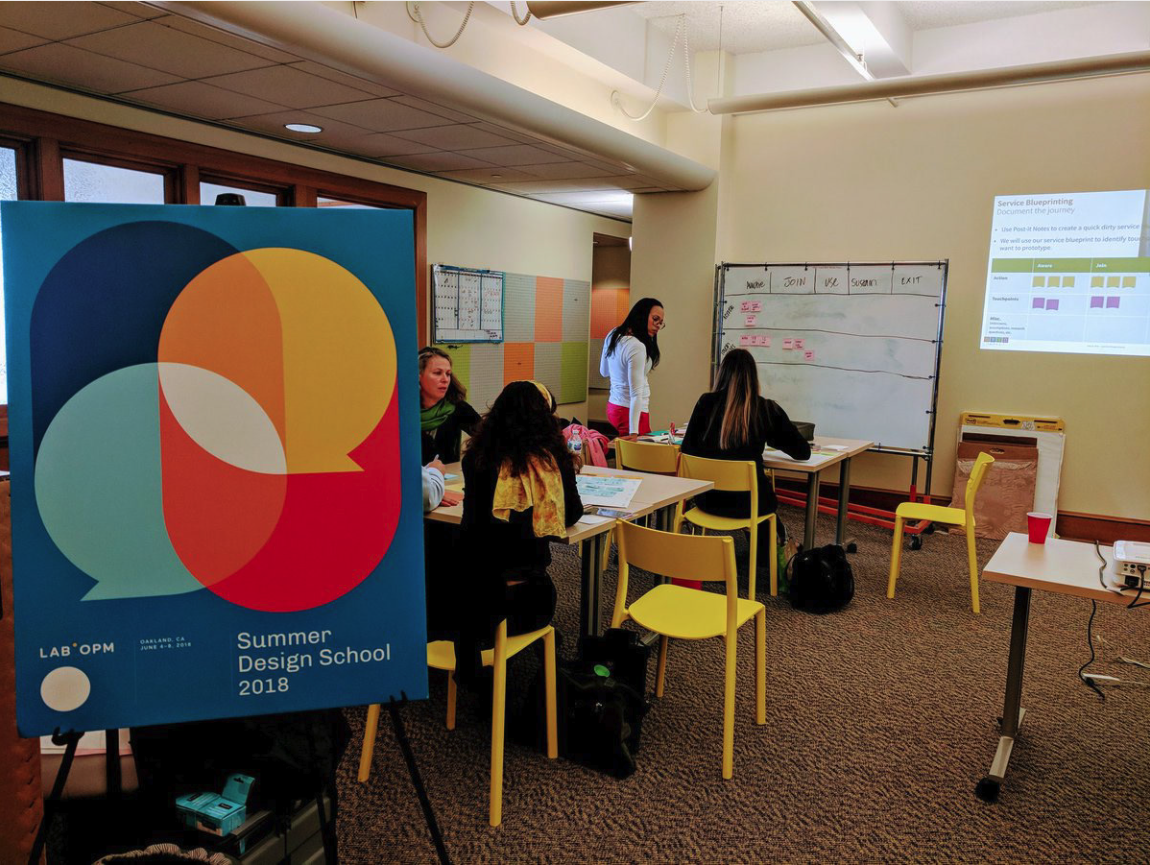
Coaching in action: Guiding teams through applied methods and real-time decision-making — where the method meets the work.

Synthesis: Translating research insight into a coherent concept direction — the phase where most workshops lose momentum.
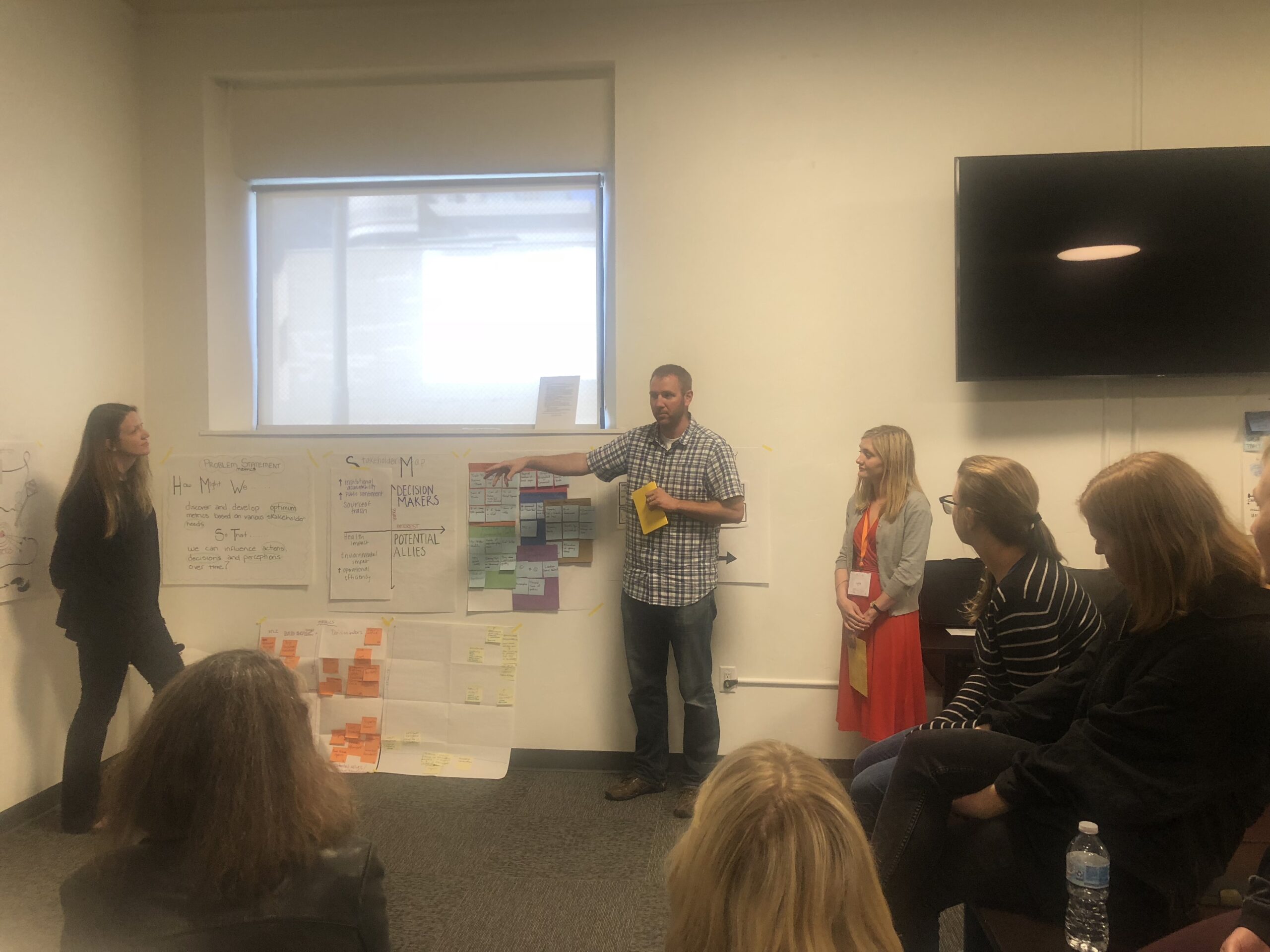
Making it real: Turning ideas into a concrete, testable solution — grounded in constraints, not just optimism.

Cosine Collective: The facilitator and coaches — all MBA in Design Strategy alumni — embedded across teams to guide the work.

Pitch readiness: Refining story, clarity, and executive framing — preparing to present to the Mayor and city leadership.
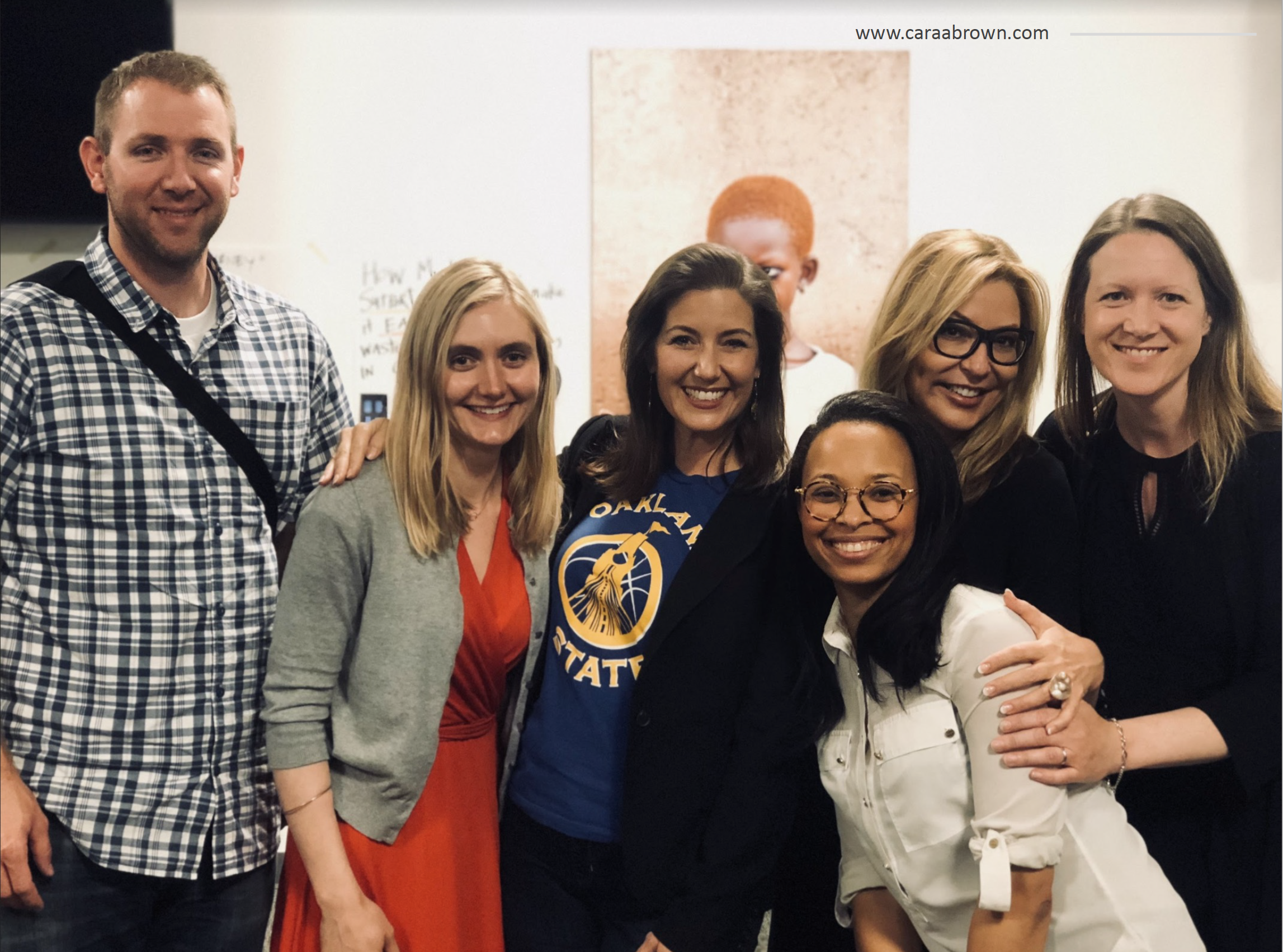
Winning team: Trash Dash selected as best in class — chosen by the Mayor of Oakland for real-world implementation.
Out of all team solutions presented, Trash Dash — developed by my team — was chosen as the best on final presentation day by Oakland's mayor, who served as the judging panel's lead.
The concept moved beyond the workshop — selected for actual implementation as a civic program in Oakland. A design school outcome that became a real operational decision.
Participants left with a working understanding of how to apply design strategy to systems-level civic challenges — methods they can replicate inside their own government contexts without a facilitator present.
This project is often described as a workshop. It was also a systems design problem — how do you take a team of people with no shared context, a real and messy civic challenge, and a short runway, and produce something a mayor wants to implement?
The facilitation was the design work. Structuring the team's process, making tradeoffs legible, and shaping a pitch that could land with city leadership — those were the outputs that made the concept implementable, not just presentable.